Short answer first
Is Rio Scenarium worth it?
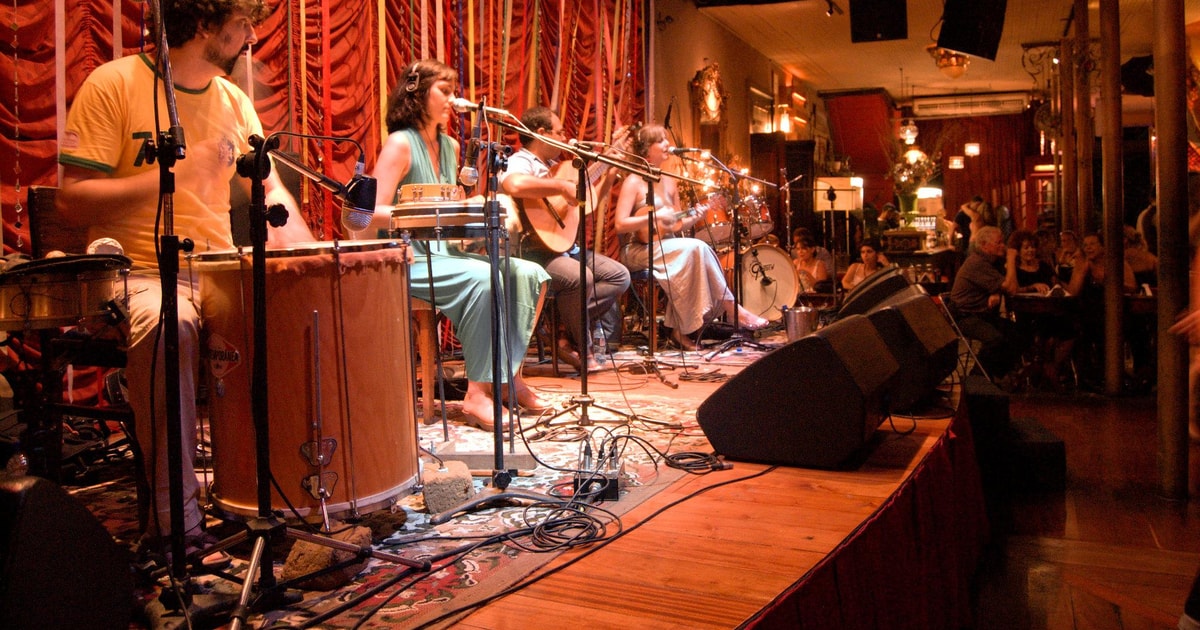
Yes, and it is one of the most fun ways to spend an evening in Rio. Guests rate the night 4.1 out of 5 across 141 reviews, and it is marked as a bestseller. You walk into a former antique shop in Lapa, three floors of chandeliers, mirrors and curios joined by stairs and a Belle Époque lift, and a live band plays samba, forró and MPB while a three-course dinner and a three-hour open bar keep the table happy. Fast-track entry gets you inside quickly, so the evening starts with the music rather than a queue.
What makes the night
The building
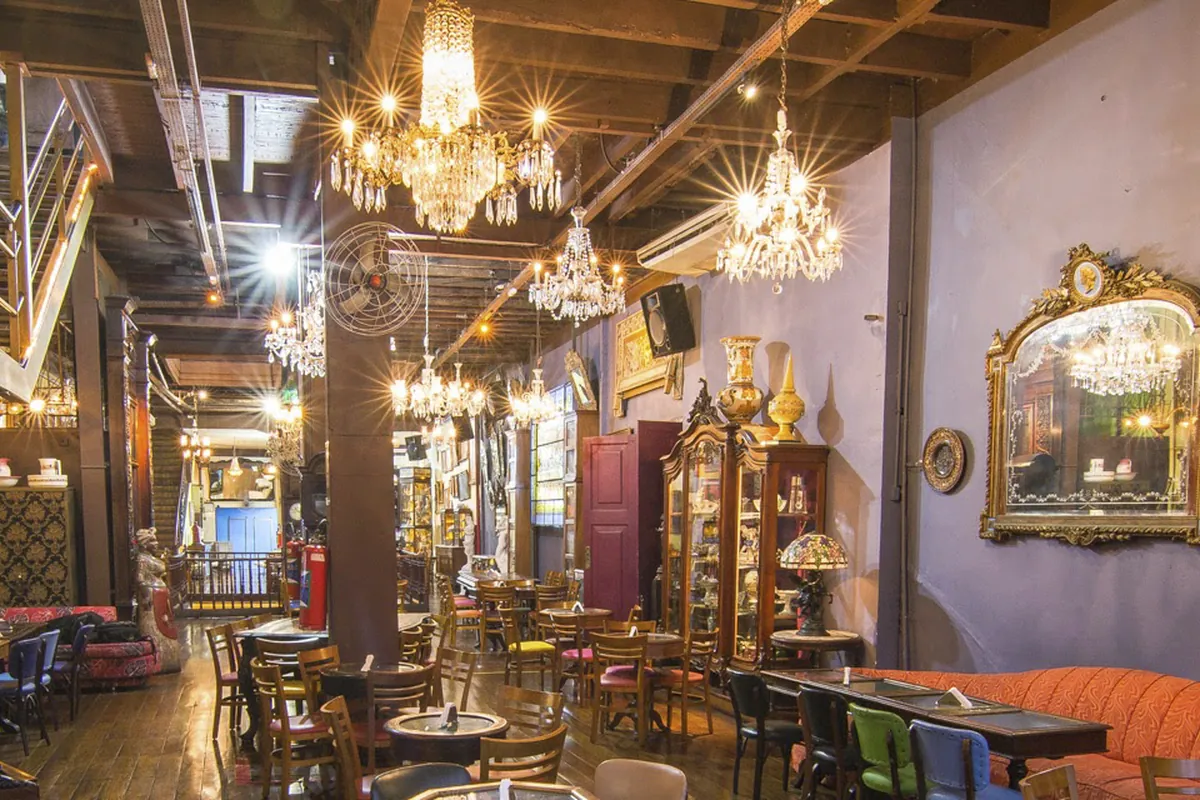
Rio Scenarium began life as an antique shop and grew into a music house on three levels, all filled with antiques and props that the booking page says have also served in film productions. Stairs and a Belle Époque lift link the floors, so part of the fun is wandering between rooms with a drink in your hand and finding a different corner each time.
The music
The listing promises live samba, forró and MPB, the three sounds Lapa is known for. Samba is the street rhythm of Rio, forró is the accordion-led dance music of Brazil's northeast and MPB is the songwriter tradition that grew after bossa nova. Together they make a night that moves from a sway to a full dance.
The table
Dinner is three courses, with a choice of two starters and two mains and one dessert, and the open bar runs for three hours. It pours water, soft drinks, selected beer, caipirinha and caipivodka. Tips and extra drinks are paid on the night.
Getting there
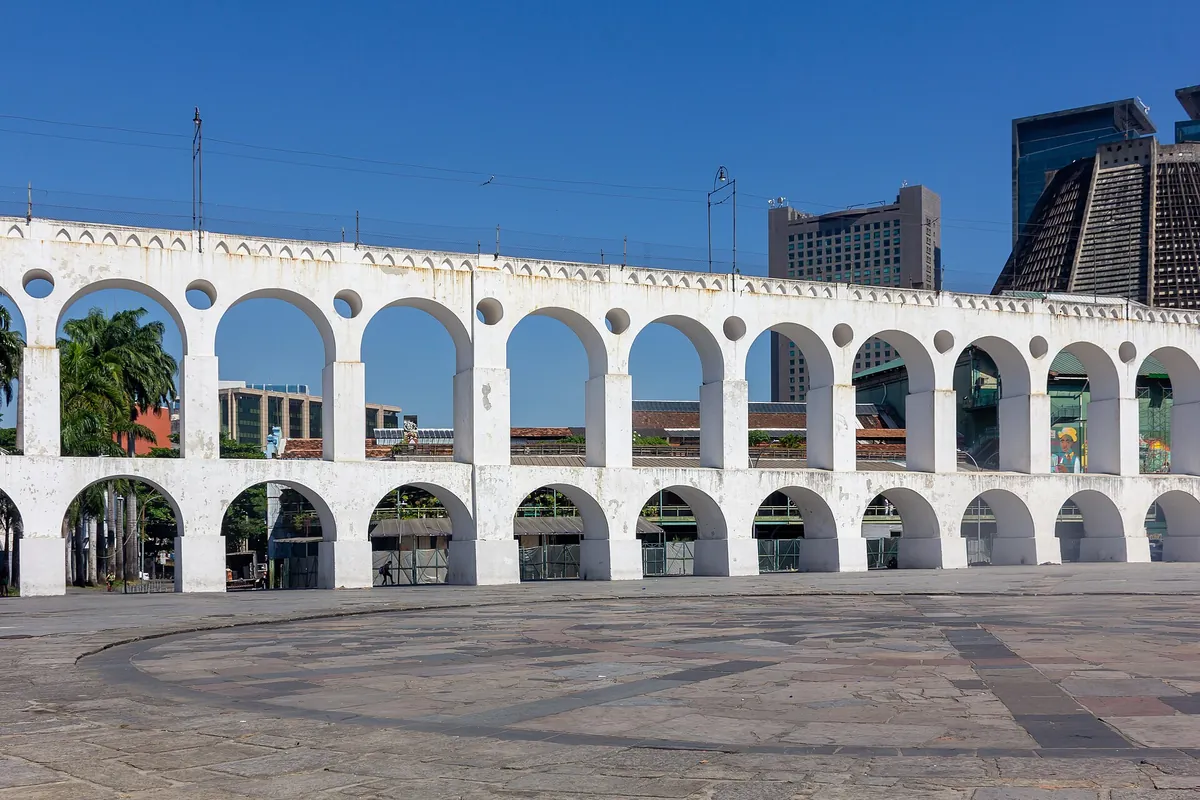
Transfers are available from the South Zone, covering Copacabana, Ipanema, Leblon and Leme, which turns a late finish into an easy ride home. Lapa itself is the neighbourhood of the white Arcos da Lapa aqueduct, so a short stroll before dinner makes a good opener.
Who it suits
Friends, couples and small groups who want music, dinner and drinks under one booking, and anyone who would like a first night in Rio that feels like the city. The booking confirmation is the last word on seating and anything the page leaves open.
Seven threads in the Lapa story
Seven threads in the Lapa story
A night at Rio Scenarium sits on top of an aqueduct, a bohemian district and several kinds of Brazilian music. Each note below draws on encyclopaedia entries and explains the background without promising what your particular band will play.
-
Arches
The aqueduct that frames the district
The Arcos da Lapa, formally the Carioca Aqueduct, was inaugurated in 1750 to bring water from the Carioca River into the city. Its Lapa stretch runs 270 metres on two storeys of 42 arches, up to 17.6 metres high. Since 1896 it has carried the Santa Teresa tram, and its white arches are the district's landmark.
The Arcos da Lapa, the aqueduct above Lapa. -
Lapa
The cradle of bohemian Rio
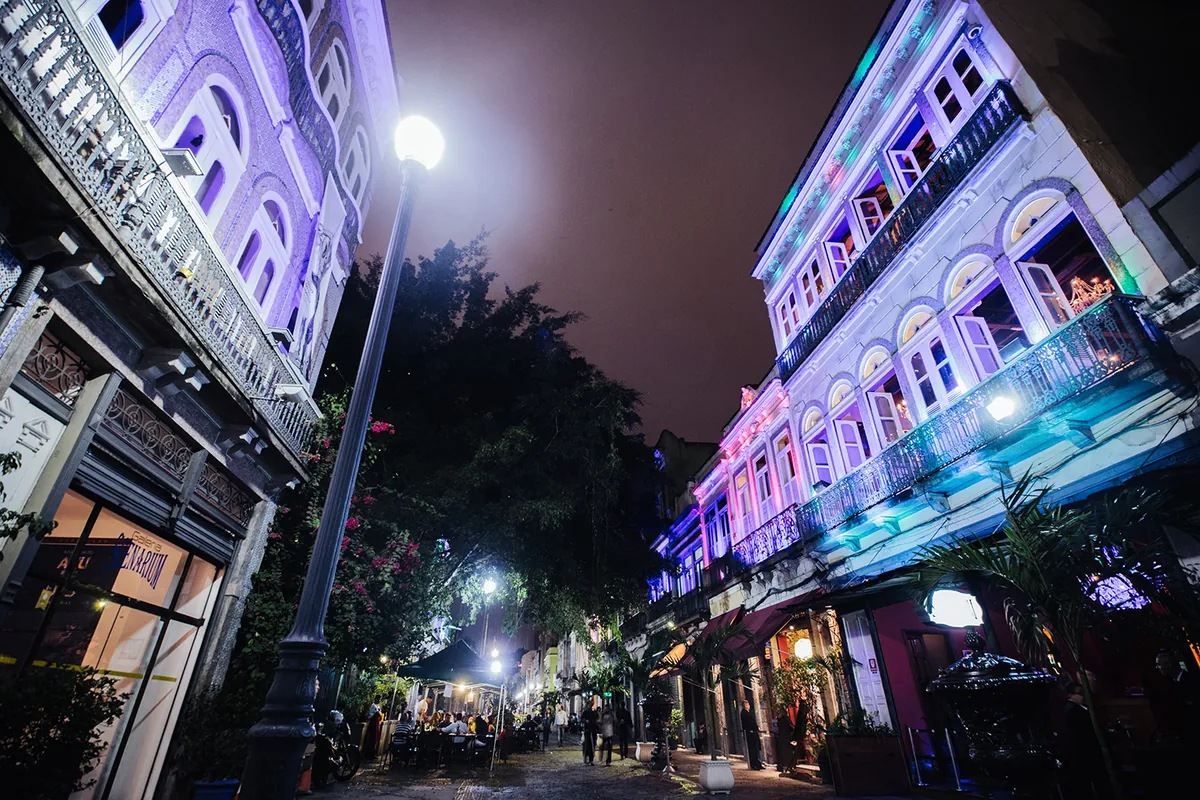
Wikipedia calls Lapa the cradle of bohemian Rio and notes that since the 1950s people have nicknamed it the Montmartre Carioca. Artists, intellectuals and ordinary cariocas gathered here to celebrate samba, forró, MPB and choro, and later electronic music and rock. Rio Scenarium appears in Wikipedia's list of the district's well-regarded music venues.
The Lapa street outside Rio Scenarium after dark. -
Samba
The rhythm Rio gave the world
Wikipedia describes samba as an Afro-Brazilian tradition with roots in Bahia that took its modern shape in the Estácio neighbourhood in the late 1920s. The 1916 song Pelo Telefone, issued as a carnival samba, is seen as the founding landmark of modern Carioca samba. Its sound comes from percussion such as the pandeiro, cuíca, tamborim and surdo, with guitar and cavaquinho above.
-
Forró
The dance party from the northeast
Forró is a music, a dance and the event itself, and it is an important part of the culture of Brazil's Northeast. Its classic trio is an accordion, a zabumba drum and a metal triangle, and Wikipedia credits Luiz Gonzaga with bringing the music to the Southeast. Brazil recognised forró as cultural heritage in 2021, and in Lapa the Asa Branca club is named as a key venue.
-
MPB
Song, poetry and a little jazz
Música popular brasileira is a post-bossa nova trend that revisits samba, baião and other regional styles and blends them with influences such as jazz and rock. Elis Regina's 1965 performance of Arrastão on national television is often linked to its beginning. Caetano Veloso, Gal Costa, Tom Jobim and Chico Buarque are among the artists Wikipedia names.
-
Caipirinha
Cachaça, sugar, lime and ice
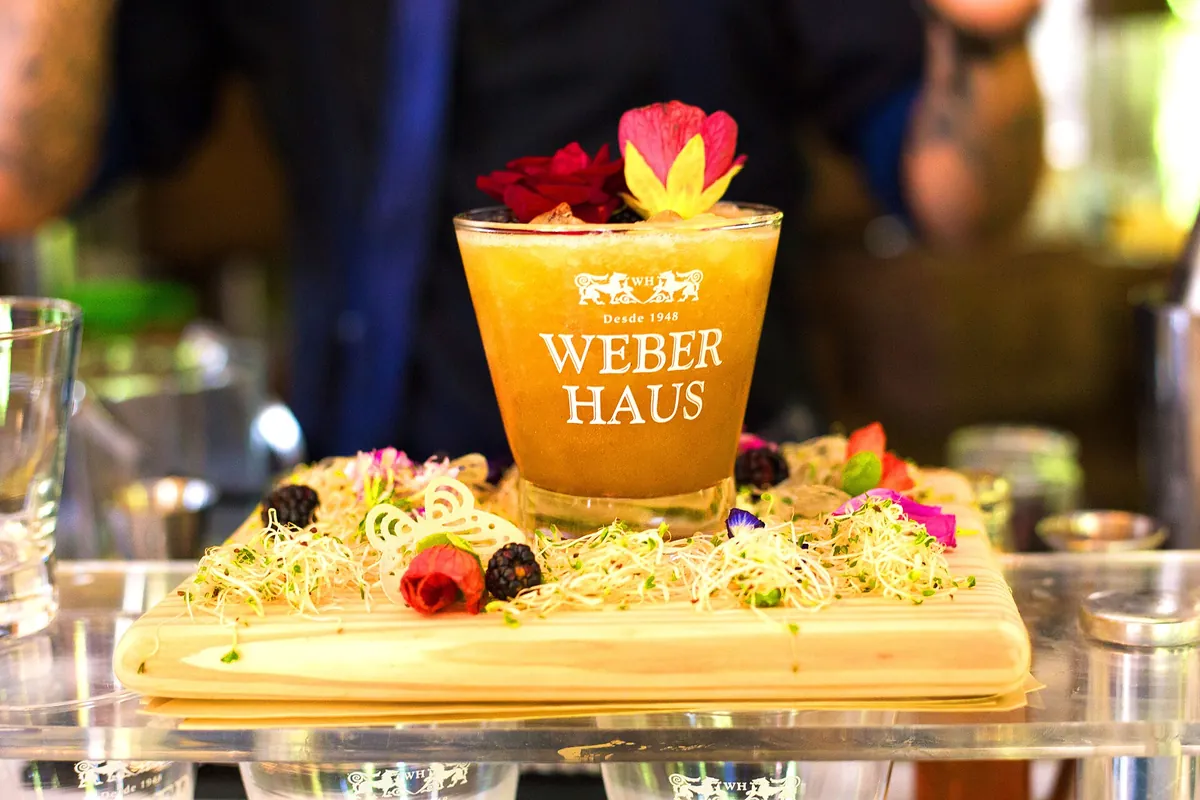
The caipirinha blends cachaça with sugar, lime and ice, and Wikipedia says it began in the state of São Paulo before becoming Brazil's best-known cocktail. It was declared Brazilian cultural heritage in 2003 and Rio de Janeiro intangible heritage in 2019. Swapping the cachaça for vodka gives the caipiroska, the cousin the booking page calls caipivodka.
A caipirinha: cachaça, sugar, lime and ice. -
Steps
A staircase tiled by one man
Chilean painter Jorge Selarón moved to Lapa in the 1980s and in 1990 began decorating the 215 steps that climb towards the Convent of Santa Teresa with ceramic tiles, many donated by friends and supporters. The work took twenty years, the steps became a city landmark in 2005, and they appeared in Rio's bid for the 2016 Olympic Games.
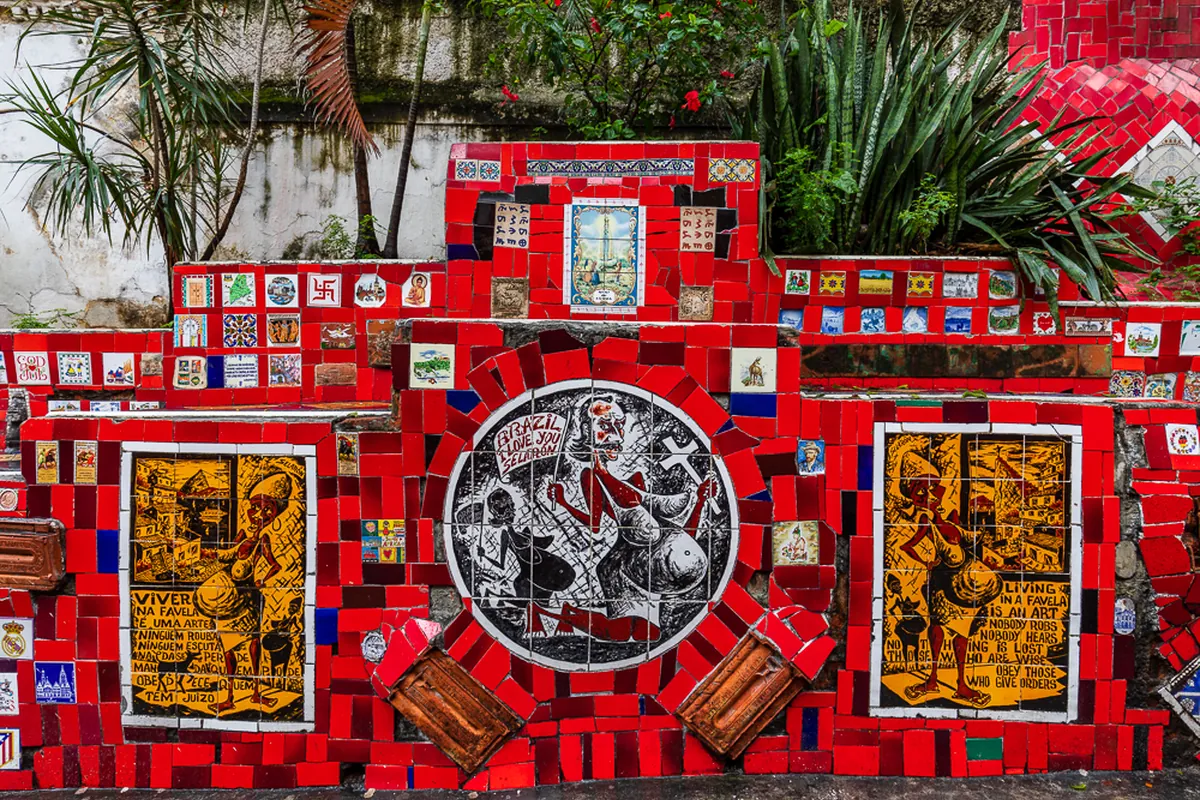
The tiled Selarón steps between Lapa and Santa Teresa.
Drawn from Wikipedia entries on Lapa, the Carioca Aqueduct, samba, forró, MPB, choro, the caipirinha, cachaça and Jorge Selarón. They give context only and say nothing about which songs your band will play.
From a colonial aqueduct to the samba clubs
Eight dates from a banned spirit to the Lapa steps
- 1661
Cachaça is legalised on 13 September, after the Cachaça Rebellion of 1660 and 1661; the date is now Cachaça Day
The source: Wikipedia's Cachaça article
- 1750
The Carioca Aqueduct, known as the Arcos da Lapa, is inaugurated to carry water from the Carioca River into the city
The source: Wikipedia's Carioca Aqueduct article
- 1896
The aqueduct begins a second life carrying the Santa Teresa tram, which still crosses it
The source: Wikipedia's Carioca Aqueduct article
- 1916
Pelo Telefone comes out under the heading carnival samba and is treated as the founding landmark of modern Carioca samba
The source: Wikipedia's Samba article
- Late 1920s
Samba takes its modern shape in the Estácio neighbourhood and spreads across Rio by the commuter railway
The source: Wikipedia's Samba article
- 1965
Elis Regina sings Arrastão on national television, an event often linked to the start of MPB
The source: Wikipedia's Música popular brasileira article
- 1990
Jorge Selarón starts tiling the 215 steps up to the Convent of Santa Teresa, a job that takes twenty years
The source: Wikipedia's Jorge Selarón article
- 2005
UNESCO lists samba de roda as intangible heritage, and the Selarón steps become a city landmark
The source: Wikipedia's Samba and Jorge Selarón articles
What the booking includes
The booking, point by point
Each line below is taken from the booking page as it stood on 20 November 2026. A point the page skips is skipped here as well, and your confirmation message settles anything still open.
See open nights ↗Shown as the lowest fare spotted on 20 November; your date and option set the final total.
- The night
- Entrance to Rio Scenarium in Lapa with dinner and an open bar, over about three hours, and a live band playing samba, forró and MPB.
- The house
- A former antique shop turned into a music house on three levels, linked by stairs and a Belle Époque lift, filled with antiques and props also used in film productions.
- Dinner
- Three courses: a choice of two starters, a choice of two mains and one dessert.
- The open bar
- Three hours of water, soft drinks, selected beer, caipirinha and caipivodka.
- Getting in and home
- Fast-track entry through a side entrance. Transfers are available from the South Zone: Copacabana, Ipanema, Leblon and Leme.
- Paid on the night
- Tips and extra drinks are not included. Cancelling is free and payment comes later, with the exact terms shown for the date you choose.
A club night or a pub crawl in Lapa
Rio Scenarium or a Lapa pub crawl?
More ways to fill your days in Rio
More Rio bookings to pair with it
The Lapa night takes one evening. Around it sit a pub crawl through the same streets, a cable car to Sugarloaf and a samba lesson in Ipanema, each with its own guest score.
- See dates ↗
Rio Scenarium entrance, dinner and open bar
Live samba, forro and MPB across three floors of antiques in Lapa, with a three-course dinner and a three-hour open bar.
- See dates ↗
Lapa pub crawl with cachaça tasting and live samba
A four-hour walk through the same district, with five cachaças, a caipirinha and live samba before a nightclub finish: the roaming alternative to one room.
- See dates ↗
Sugarloaf cable car
Two cable-car rides up to Morro da Urca and Sugarloaf Mountain for views over the city and the coast, a daytime partner to a night in Lapa.
- See dates ↗
Beginner samba lesson in Ipanema
Learn the basic steps with a small group in Ipanema, then try them out when a live band plays. Photos of your class are included.
Also bookable in Rio de Janeiro
Shaping the night
Before you set off
Pick the night
Friday and Saturday nights fill first, so those dates go early. Open the calendar, choose a date and the options for it appear.
Decide how to arrive
Transfers are available from the South Zone, which covers Copacabana, Ipanema, Leblon and Leme. If you stay elsewhere, plan your own route to Lapa and note the way home before you leave.
Start with the arches
The white Arcos da Lapa stand in the heart of the district, and the tiled Selarón steps sit on its edge. An hour of daylight there sets up the evening nicely.
Pace the glass
The open bar runs for three hours and pours caipirinha among its drinks. Sip between courses, drink water in between and the night stays a good one from the first song to the last.
Arches, facade, stairs and the glass in your hand
Arches, facade, stairs and the glass in your hand
Five Wikimedia Commons pictures: a club interior, the Lapa street at night, the white arches, the tiled steps and a caipirinha. Treat them as scene-setters for the guides; none is a photograph of the night you would book.
Six deeper reads
Six reads on the music, the arches and the drinks
- Start here Is Rio Scenarium worth it? Reading a 4.1 from 141 guests in Lapa A live-music house in Rio's bohemian quarter, weighed up: what the booking includes, what the music is, and why a night here is such an easy yes. Read →
- The comparison Rio Scenarium or a Lapa pub crawl: which Rio night? Two ways to spend an evening in the same district, a seated club night with dinner and a four-hour walk between bars, set side by side. Read →
- The landmark Are the Arcos da Lapa worth a look before your night out? The white aqueduct above the district: who built it, why it has two storeys of arches, and why a tram now crosses it. Read →
- The music Can you enjoy a Lapa night without knowing samba, forró or MPB? A listener's map of the three sounds the booking page promises, drawn from encyclopaedia entries, so the first song already feels familiar. Read →
- The drink Is the caipirinha worth ordering at an open bar in Rio? Cachaça, sugar, lime and ice: where Brazil's national cocktail comes from, what the caipivodka is, and how to enjoy the open bar. Read →
- The steps Is the Selarón steps stop worth adding to a Lapa evening? A staircase of 215 steps tiled by a Chilean painter, on the edge of the same district, and how to fit it before your night out. Read →
FAQ
Quick answers to settle first
Is Rio Scenarium worth it?
Yes. A 4.1 score from 141 guests backs it up. You get live samba, forró and MPB in a three-floor house of antiques, a three-course dinner and a three-hour open bar, all under one booking.
What is included in the ticket?
Entrance with fast-track access through a side entrance, a three-course dinner with a choice of two starters and two mains and one dessert, and a three-hour open bar of water, soft drinks, selected beer, caipirinha and caipivodka.
What music will I hear?
The booking page promises live samba, forró and MPB. It names no band, so your date decides which musicians play.
Can I get a transfer?
Transfers are available from the South Zone, which covers Copacabana, Ipanema, Leblon and Leme. Look at the calendar to see the choices for the day you want.
Are tips and extra drinks included?
No. Tips and any drinks beyond the open bar are paid on the night.
Is the club really in an old antique shop?
The booking page says so: a former antique shop turned into a music house on three levels, linked by stairs and a Belle Époque lift, full of antiques and props also used in film productions.
Has the venue had any press praise?
The booking page quotes The Guardian as naming it among the world's top bars. That quote comes from the listing, and we have not checked it independently.
Can I cancel?
Yes. Cancelling costs nothing, and you pay later rather than today. The calendar spells out the exact terms for the day you select.